
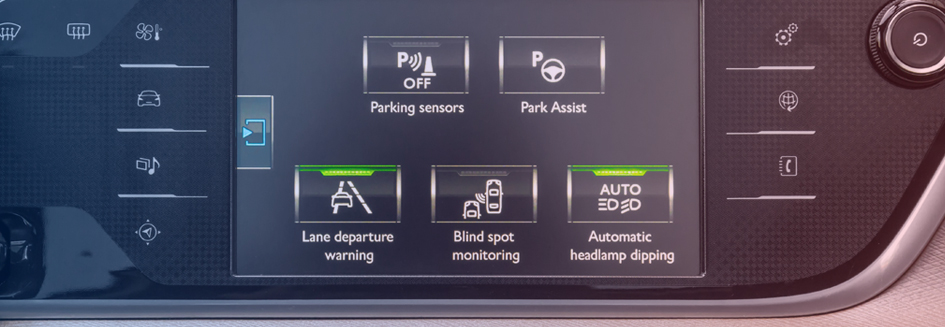
By using a combination of sensors, cameras, and radar or LiDAR, ADAS continuously monitors a vehicle’s surroundings to help drivers avoid hazards and mitigate risks. From lane departure warnings to adaptive cruise control, these features support the driver in real time, reducing the likelihood of accidents and improving overall road safety.
Different ADAS Systems
ADAS comes in various forms, each targeting specific safety and convenience needs, such as:
Lane Departure Warning / Lane Keeping Assist
Adaptive Cruise Control
Automatic Emergency Braking
Blind Spot Monitoring
Traffic Sign Recognition
Adaptive Headlights
Adaptive Headlights
By understanding each system’s function, businesses and motorists alike can appreciate the importance of proper calibration and maintenance.
The Technology Behind ADAS
 
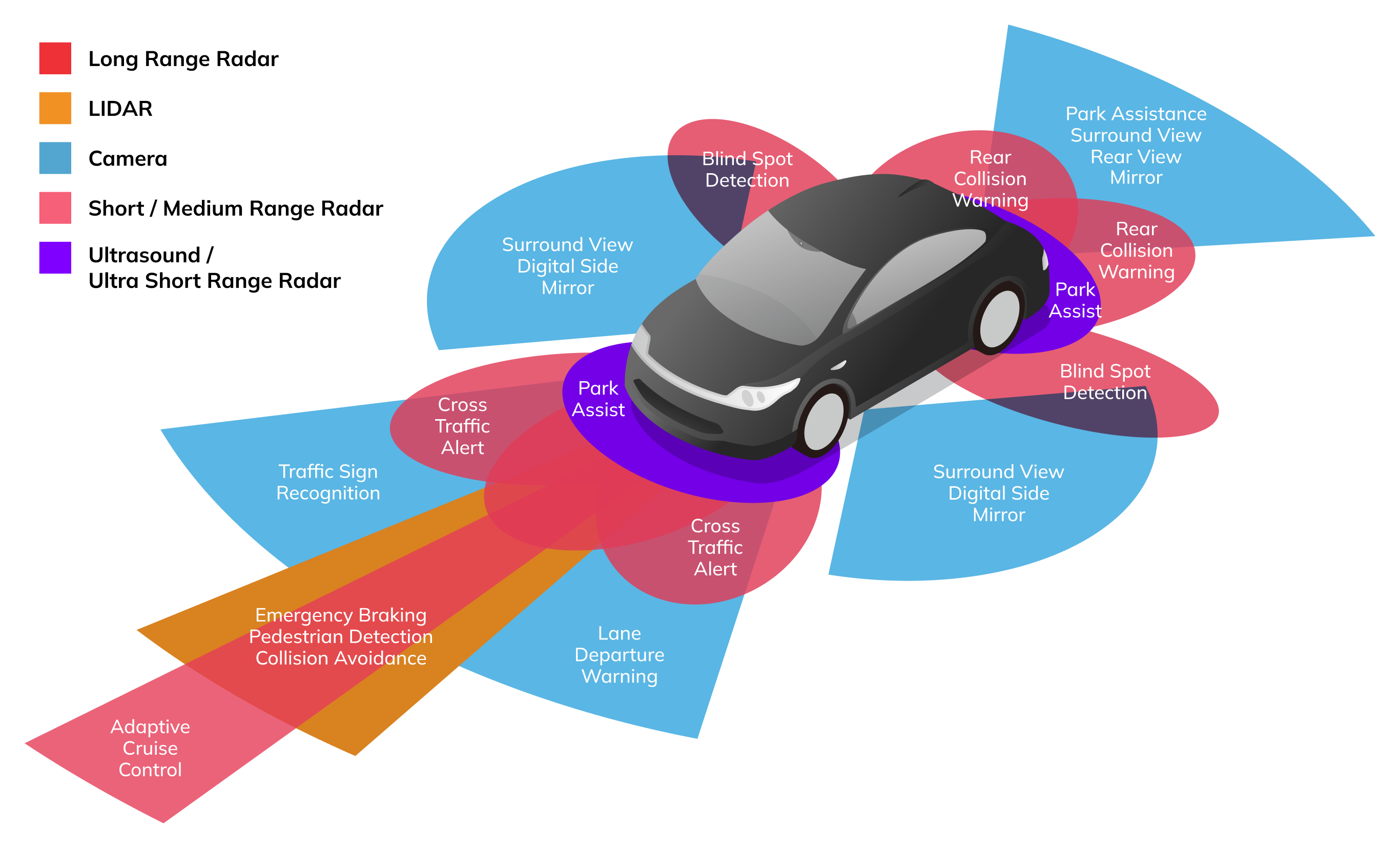
ADAS relies on several types of sensing and data-processing technologies, including:

Lidar icon
LiDAR (Light Detection and Ranging)
Uses laser-based sensors to measure distances and detect objects with high accuracy.
Radar icon
Radar
Employs radio waves to sense the speed and positioning of nearby vehicles or objects.
Camera icon
Cameras
High-resolution camers capture visual data for systems like lane assist and traffic sign recognition.

Sensor icon
Ultrasonic Sensors
Often used for parking aids and blind spot detection.
ADAS icon

Active vs. Passive ADAS


Active ADAS: These systems take direct action to prevent accidents or collisions (e.g., automatic emergency braking will engage the brakes when a potential collision is detected).

Passive ADAS:These systems provide alerts and warnings only (e.g., blind spot monitoring beeping when a car is detected, but not taking any physical action).

The Importance of Calibration


Keeping ADAS features accurate is essential. Even minor misalignments following windscreen replacement, body repairs, or general wear and tear can compromise system performance. Proper calibration ensures that the vehicle's sensors and cameras are aligned to manufacturer specifications, allowing ADAS to function reliably and safely.

When is Calibration Required?


  • After any windscreen replacement or repair
  • Following collisions or damage to the vehicle's bodywork
  • Whenever wheel alignment is performed
  • If sensors, cameras, or other ADAS components are replaced or removed
  • During routine servicing when recommended by the vehicle manufacturer

The Risks of No or Incorrect Calibration


  • Compromised Safety: A miscalibrated ADAS might fail to alert the driver, apply the brakes too late, or give false alarms.
  • Invalidated Warranty or Insurance: Many manufacturers require proof of proper calibration; failing to calibrate can breach policy or warranty terms.
  • Reduced Vehicle Performance: Incorrect calibration can affect the overall performance of the vehicle, leading to inefficient operation and potential mechanical issues.
Speak to our experts today
 

Speak to our experts today and experience the confidence that comes from working with IMI-accredited professionals